Quebec's Casino Reward Ecosystems: How Game Contribution Rates Shape Bonus Outcomes for Slots and Table Games
Dana Schmid · Sep 3, 2026
Quebec's Casino Reward Ecosystems: How Game Contribution Rates Shape Bonus Outcomes for Slots and Table Games
Quebec's casino operators structure reward programs around contribution rates that determine how much each game type advances players toward bonus wagering requirements, and these mechanics directly influence payout patterns across different titles. Data from provincial gaming reports indicate that slots typically contribute at full or near-full rates while table games receive reduced percentages, which creates distinct pathways for bonus completion depending on player preferences and game selection. Those who've examined the systems note that this framework emerged from regulatory guidelines set by the Régie des alcools, des courses et des jeux, which oversees Loto-Québec operations and affiliated platforms.
Core Mechanics of Contribution Rates
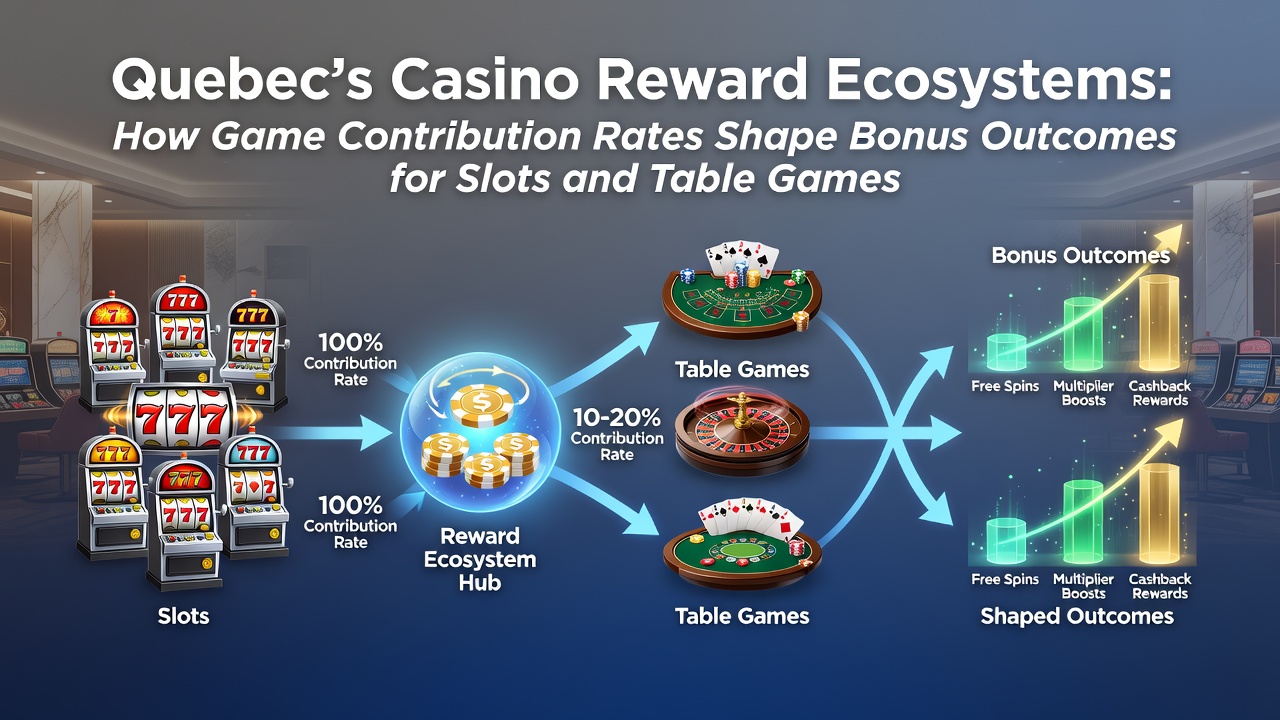
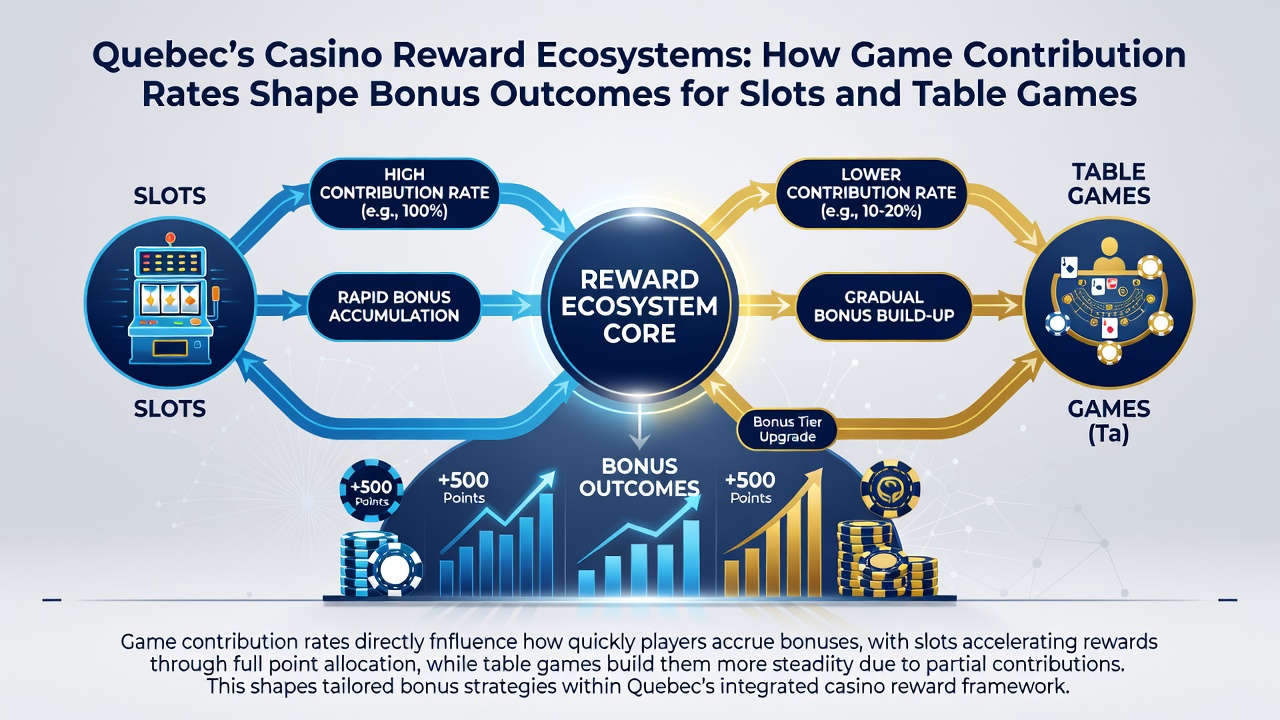
Operators assign contribution percentages to individual games so that wagering requirements reflect the house edge and volatility of each category, and slots often receive 100 percent contribution while blackjack or roulette might count at 10 to 20 percent. This differentiation means a player completing a 40-times wagering target on a slot-heavy portfolio advances faster than someone relying on table games, because the effective amount wagered per spin or hand varies significantly. Research from Canadian gaming associations shows these rates appear in bonus terms and conditions, where the calculation multiplies the bet amount by the contribution percentage before adding it to the progress meter.
Slots and Their Dominant Role in Bonus Progress
Slots dominate bonus ecosystems in Quebec because their high contribution rates allow players to meet targets more efficiently, and popular titles such as progressive jackpot machines or video slots frequently list at 100 percent. When a player places a $5 spin on a qualifying slot, the full amount counts toward the requirement, whereas the same bet on a table game might add only 50 cents. Figures released in September 2026 by provincial regulators revealed that slots accounted for over 70 percent of bonus redemptions processed through Quebec-licensed sites during the preceding fiscal year, highlighting how these rates steer player behavior toward specific game categories.
Table Games and Reduced Contribution Impact
Table games receive lower contribution rates that slow bonus completion and encourage strategic bankroll management, since games like baccarat or poker variants often contribute between 5 and 25 percent depending on the operator. A player wagering $100 on blackjack might see only $10 to $25 added to the requirement, which extends the number of hands needed to clear a bonus and increases exposure to the game's lower house edge. Observers note that this structure preserves operator margins while still offering table game enthusiasts access to promotions, although teh extended timelines can lead to different outcome distributions compared with slot-focused play.
Interactions Between Game Types and Bonus Structures
Hybrid players who mix slots and table games encounter combined contribution calculations that blend the two rates, and operators typically apply the percentages proportionally to each wager type within a single session. This creates scenarios where a session heavy on slots can offset slower progress from occasional table game bets, yet the overall timeline remains longer than a pure slots approach. Industry reports from the Canadian Gaming Association indicate that bonus outcome data collected across multiple Quebec platforms in 2025 demonstrated higher completion rates for players who allocated at least 80 percent of their wagering volume to high-contribution slots.
Regulatory Context and Recent Updates
Quebec's regulatory environment requires transparent disclosure of contribution rates in all promotional materials, and updates published in September 2026 reinforced the need for clear labeling of percentages on both desktop and mobile interfaces. These rules aim to maintain fairness across the ecosystem while allowing operators flexibility in designing promotions that align with game volatility profiles. Provincial oversight documents emphasize that contribution rates must remain consistent throughout a bonus period, preventing mid-promotion changes that could disadvantage players.
Comparative Examples Across Platforms
One platform operating under Loto-Québec licensing lists video slots at 100 percent contribution, live dealer blackjack at 15 percent, and roulette at 10 percent, while another adjusts table game rates upward to 20 percent for select variants during promotional windows. Players comparing these structures find that the same $2,000 wagering requirement demands roughly 2,000 spins at $1 on slots versus several thousand more hands at reduced table game rates. Data compiled by academic researchers at Université de Montréal has examined these variations and found measurable differences in average bonus redemption times across the two models.
Conclusion
Contribution rates function as the central mechanism that shapes how bonuses resolve in Quebec's casino reward systems, with slots accelerating progress and table games extending timelines according to their assigned percentages. Regulatory updates through 2026 have maintained emphasis on transparency, ensuring players receive clear information about how each wager advances their requirements. Industry analyses continue to track these patterns, revealing consistent correlations between game selection and bonus completion metrics across licensed operators.